


Vital Farms Pasture-Raised Eggs – 18-Count Pantry Staple for Home Kitchens and Daily Meal Prep
Vital Farms Pasture-Raised Eggs – 18-Count Pantry Staple for Home Kitchens and Daily Meal Prep
Couldn't load pickup availability
Why you'll love it
- Pasture-raised hens and year-round outdoor access align with animal-welfare preferences
- Sourcing from small farms supports a more personal relationship with producers
- Farm traceability gives shoppers clearer confidence in where their eggs originate
- The brand's BS-Free commitment reinforces an ethical and transparent sourcing image
- Large eggs suit common breakfast, cooking, and baking techniques
- The clearly disclosed non-organic format accommodates shoppers who intentionally choose conventional eggs
Perfect for
- Preparing everyday breakfasts such as fried, boiled, or scrambled eggs
- Adding eggs to salads, sandwiches, and other meal-prep dishes
- Baking cakes, breads, and other recipes that call for eggs
- Stocking a family kitchen with a convenient 18-count carton


Product Information
Non-Organic
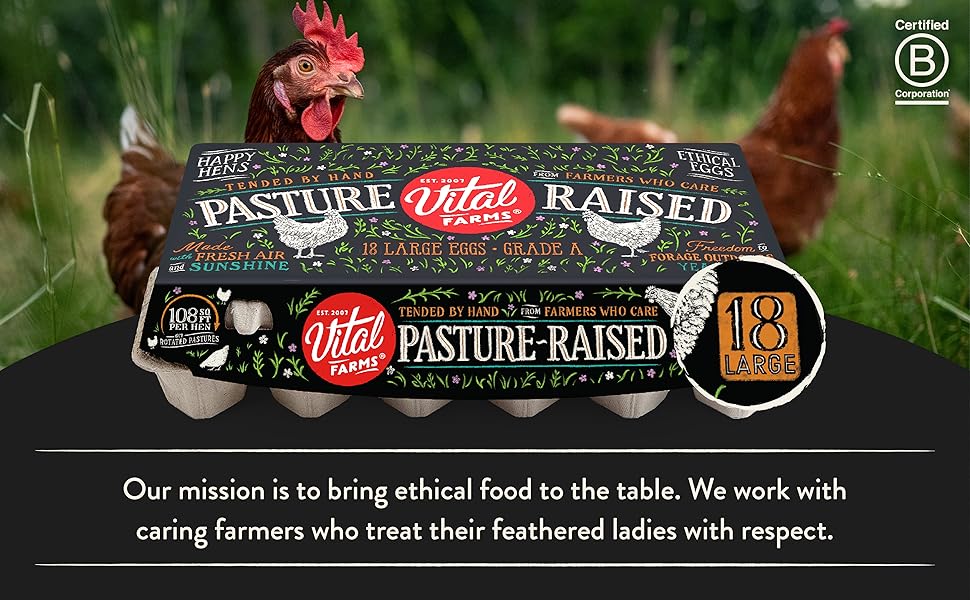
Our mission is to bring ethical food to the table. We aim to improve the lives of people, animals, and the planet through food. Our eggs and butter from small farms are ethical foods you don’t have to question. Whether it’s giving the girls year-round outdoor access, supporting farmers, enabling you to trace your eggs back to the farm, or setting the record straight in the egg aisle, you can always trust that Vital Farms is Keeping it BS-Free.
Ingredients
eggs
Frequently Asked Questions
Can this 18-count carton streamline my weekly meal preparation?
Yes. The carton supplies a clearly measured quantity for breakfasts, salads, sandwiches, and baking. Boil, cook, or portion eggs ahead of time to reduce repeated preparation during busy weekdays.
Are these eggs a practical choice for a busy home kitchen?
Yes. Large eggs work across common breakfast and cooking methods, and the 18-count format supports regular family use. Keeping them refrigerated in the carton makes them easy to plan around.
How can eggs support a focused work-from-home lunch routine?
Prepared eggs can make a convenient lunch while you work. Boiled eggs, egg sandwiches, or salads require little assembly, while recipes such as frittatas can batch several portions at once.
Can these eggs help with efficient batch cooking?
Yes. Their large size is useful for recipes that call for multiple eggs, including omelets, frittatas, cakes, breads, and custards. Measuring the recipe's egg quantity and using similar-sized eggs helps maintain consistency.
Does the 18-count format make it easier to track kitchen inventory?
Yes. A single sealed carton gives you a clear starting quantity, and you can check remaining eggs before each meal plan. Store the carton in the refrigerator and use the eggs in date order for simple inventory control.
Are these eggs useful for both weekday breakfasts and weekend projects?
Yes. One carton can supply eggs for quick morning dishes as well as baking and batch-cooking projects. Plan around the number of eggs required by each recipe to avoid running short.
Can I make several packed lunches from one 18-count carton?
Yes, depending on portion size. One egg per sandwich or salad can support numerous lunches, while recipes using two or more eggs per serving will reduce the yield. Count the eggs before preparing the batch.
Do large eggs reduce preparation time for family breakfasts?
They do not eliminate preparation time, but their large size can provide useful volume for shared dishes such as omelets and scrambled eggs. Boiling a batch ahead can also save time on busy mornings.
Are these eggs suitable for a meal-prep routine that uses both breakfast and lunch ingredients?
Yes. You can hard-boil some eggs for breakfast, slice others into salads, and use additional eggs for sandwiches or baking. Keep cooked eggs refrigerated in a covered container.
How do these eggs compare with pre-cooked egg options for meal prep?
Shell eggs are generally more flexible because you control the cooking method and timing. Pre-cooked eggs can save preparation time, but check their ingredients, refrigeration needs, and best-by date for comparison.
How does this product compare with a smaller egg carton for a high-volume kitchen?
The 18-count carton provides a larger starting supply and can reduce the frequency of restocking. Smaller cartons may be easier to finish before the eggs age, so compare your consumption rate with the product's best-by guidance.
Is this a useful option for home bakers who need a reliable egg supply?
Yes. The 18 large eggs can cover a range of recipes, from cakes and breads to custards and pancakes. Check each recipe's quantity and use eggs of a consistent size for more predictable results.
How can I keep egg preparation efficient while reducing kitchen clutter?
Use one consistent method, such as hard-boiling a batch on Sunday and refrigerating the cooked eggs. Keep raw and cooked eggs in separate, covered containers, and clean the preparation area immediately after use.
Can one carton support a full week of family breakfasts?
Possibly. For a family of four eating one egg each morning, 18 eggs cover part of a week, but they do not cover every day. Larger breakfast portions or additional baking uses will require another carton.
Are these eggs suitable for people managing a busy kitchen schedule?
Yes. They are versatile, shelf-stable only while refrigerated, and available in a practical 18-count quantity. Their large format supports common cooking and baking tasks with minimal special equipment.
How should I store these eggs at home?
Keep the carton in the refrigerator on an interior shelf rather than in the door, where temperature fluctuates. Store the eggs in their original carton and follow the best-by date printed on the package.
How do I prepare scrambled, fried, or boiled eggs safely?
Cook the eggs until the whites and yolks are set, or until the yolk reaches a safe internal temperature. For boiled eggs, use the food-safety guidance for your local public health authority, cool them promptly, and refrigerate leftovers within two hours.
What should I check before using the eggs?
Check the carton for damage and inspect each egg for cracks. Discard eggs that appear contaminated or have been stored at unsafe temperatures. When in doubt, do not eat them.
Are these eggs compatible with standard kitchen equipment?
Yes. They work with bowls, whisks, pans, saucepans, ovens, and standard measuring tools. No specialized egg appliance is required, although an egg cooker or steamer can be used if it is operated according to its instructions.
Can I use these eggs for both savory recipes and baking?
Yes. Their large size makes them suitable for breakfasts, salads, sandwiches, quiches, frittatas, cakes, breads, cookies, and custards. Follow the quantity and temperature specified by each recipe.
What comes in the package?
The package contains one 18-count carton of Vital Farms large, non-organic, pasture-raised shell eggs. No cooking equipment, cooler, or additional accessories are included.
Are these eggs safe for everyone to eat?
Eggs are a common allergen. People with an egg allergy should avoid them. Pregnant people, young children, older adults, and anyone with certain health conditions should follow applicable guidance on fully cooking eggs and choosing pasteurized products where advised.
How do I know the eggs are still fresh?
Check the best-by date and keep the carton refrigerated. You can also perform a water test by placing an egg in enough water to fully submerge it: fresh eggs generally sink and lie flat, while older eggs may stand upright or float. Discard any cracked or off-odor eggs.
What is the difference between pasture-raised eggs and organic eggs?
Pasture-raised describes the hens' access to pasture and outdoor space. Organic eggs must also meet organic production, feed, and certification requirements. These eggs are explicitly labeled non-organic, so they are not organic products even though the hens are pasture-raised.


